TCB Metal Works, Racine, Wisconsin · tcbmetalworks.com/free-training/forklift-training/ · November 24, 2026
Read This First
This free guide covers the classroom part of forklift training: how the truck stays up, how to inspect it, drive it and handle loads, and what to do if it tips. Reading it does not make anyone a certified operator. Under OSHA, training also needs hands-on practice and an evaluation of the operator driving at the workplace, and the employer certifies the operator after all three. 1910.178(l)(2)(ii), (l)(6)
It is written for sit-down counterbalanced trucks, the common warehouse and shop forklift. Stand-up, narrow-aisle and rough-terrain trucks have their own rules in their operator manuals. Always follow the manual for your truck.
Forklift tip-overs are the leading cause of forklift deaths, about a quarter of them, and most deaths happen when a worker is crushed by a truck that tipped over or went off a loading dock. OSHA eTool: Pedestrian Traffic, Operating the Forklift Nearly every rule below is about keeping the truck on its wheels and keeping people out from under it.
How Operators Get Certified
No one drives a forklift at work until they have been trained and evaluated, except while training. 1910.178(l)(1)(ii) OSHA sets out how:
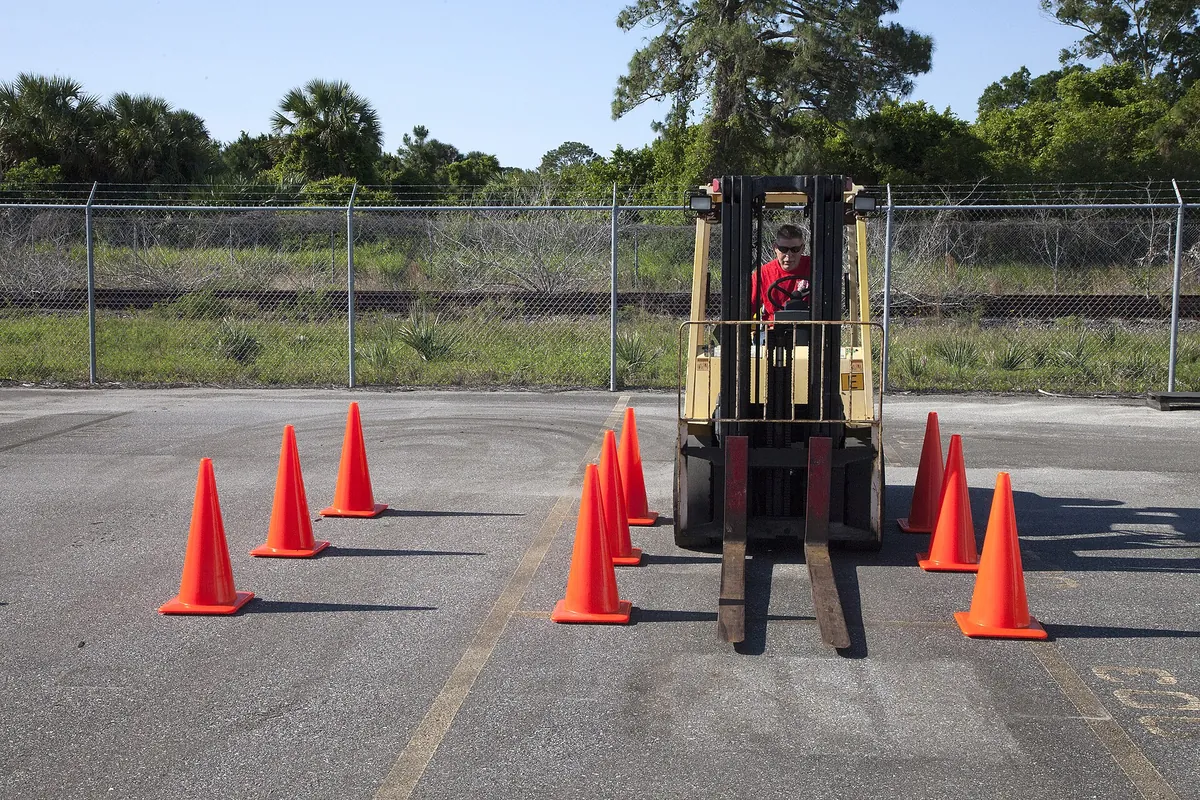
- Formal instruction: lecture, discussion, computer learning, video or written material, like this guide. 1910.178(l)(2)(ii)
- Practical training: the trainer demonstrates and the trainee practices. Trainees drive only under direct supervision of someone qualified to train and evaluate, and only where nobody is put in danger. 1910.178(l)(2)(i)
- Evaluation in the workplace: someone with the knowledge, training and experience watches the operator do the job and judges whether they are competent. 1910.178(l)(2)(iii)
- Certification: the employer certifies it in writing, with the operator’s name, the training date, the evaluation date and who did the training or evaluation. 1910.178(l)(6) The evaluation form below has those fields.
What the training has to cover
OSHA lists the topics. Truck topics include the operator manual’s instructions and warnings, how the truck differs from a car, controls and gauges, steering, visibility, forks and attachments, capacity, stability, the inspection the operator does, and refueling or charging. Workplace topics include floor surfaces, the loads carried, pedestrians, narrow aisles, ramps, hazardous locations, and closed areas where carbon monoxide or diesel exhaust can build up. A topic can be skipped only if the employer can show it does not apply. 1910.178(l)(3)
Refresher training and re-evaluation
- Every operator is evaluated at least once every three years. 1910.178(l)(4)(iii)
- Refresher training is needed when an operator is seen driving unsafely, has an accident or near miss, gets a poor evaluation, is assigned a different type of truck, or the workplace changes in a way that affects safe driving. 1910.178(l)(4)(ii)
Age: federal youth employment rules bar most workers under 18 from operating forklifts in non-farm work. OSHA SHIB 03-09-30
Know Your Truck
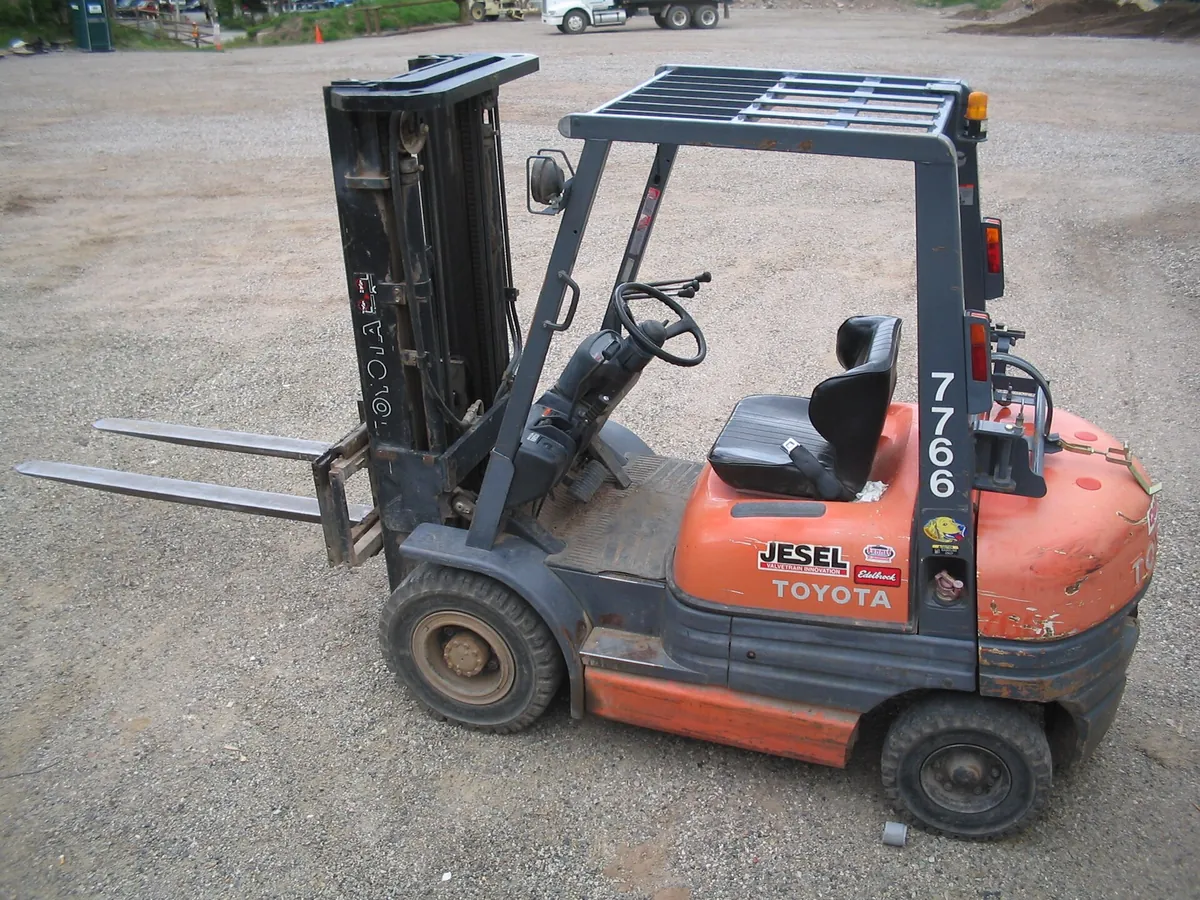
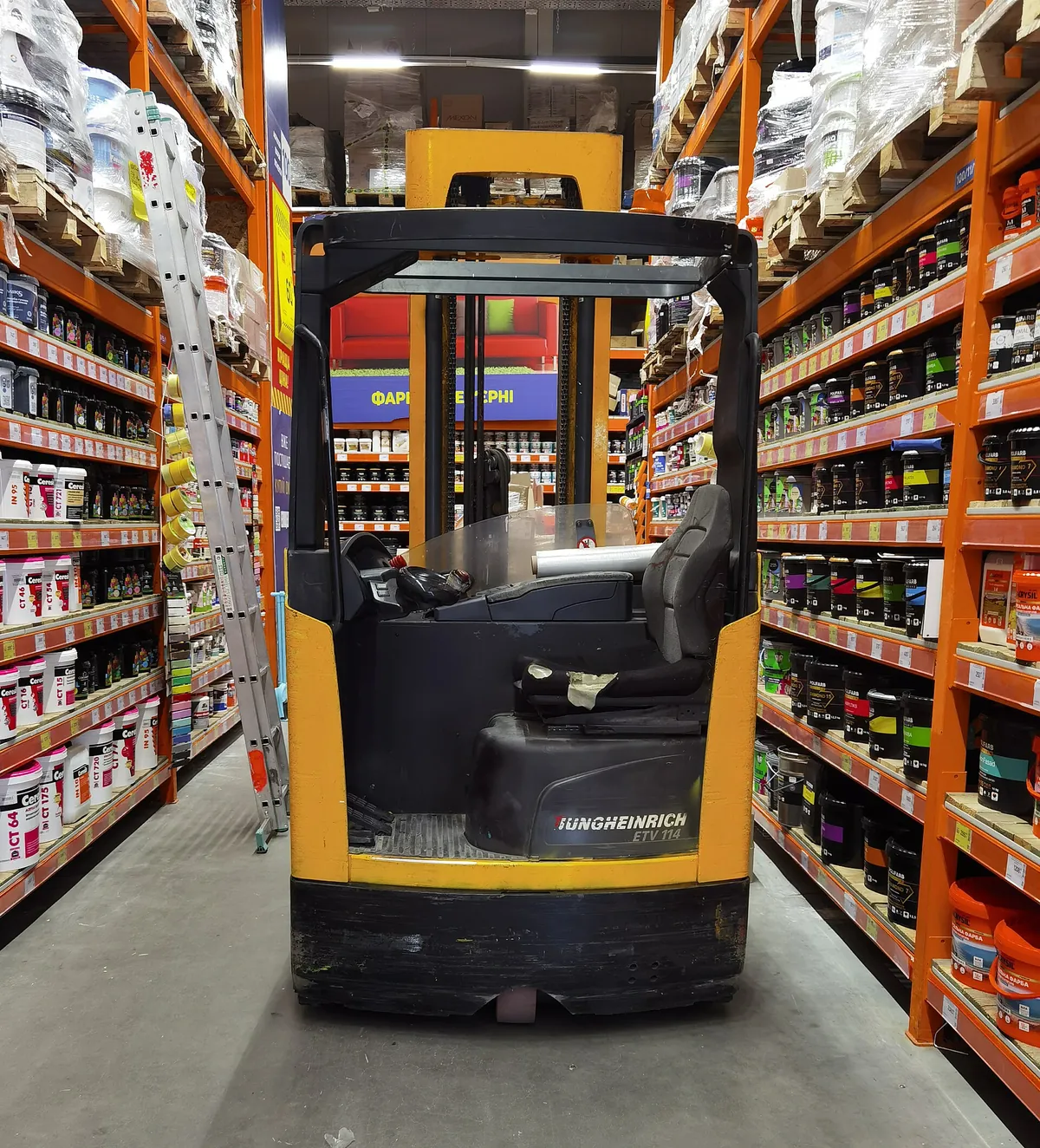
OSHA groups the common trucks into seven classes: OSHA eTool: Types
| Class | Type |
|---|---|
| I | Electric motor rider trucks |
| II | Electric motor narrow aisle trucks |
| III | Electric motor hand trucks or hand/rider trucks |
| IV | Internal combustion trucks, solid (cushion) tires |
| V | Internal combustion trucks, pneumatic tires |
| VI | Electric and internal combustion tractors |
| VII | Rough terrain forklift trucks |
How a forklift is not a car
- The rear swings out. When a forklift turns a corner, the rear swings the opposite way. Start the turn close to the inside corner and watch the tail. OSHA eTool: Traveling & Maneuvering
- It stops slowly. Forklifts are built to stop slowly so the load stays on and the truck stays stable. OSHA eTool: Pedestrian Traffic
- It tips. Its center of gravity moves every time the forks go up, the mast tilts or the truck turns. See the next section.
- The overhead guard is for small things. It protects against small packages and boxes falling, not a falling capacity load. 1910.178(m)(9)
The data plate
The nameplate shows the truck’s rated capacity at a rated load center. Check it before handling any load near the limit. 1910.178 App. A-5.2 Nameplates and markings must be in place and readable. 1910.178(a)(6) If the truck has attachments that were not installed at the factory, the employer asks for it to be marked with the attachments and the weight of truck and attachment at full height. 1910.178(a)(5) A truck with an attachment is run as a partly loaded truck even when it is carrying nothing. 1910.178(o)(4)
Capacity and Tip-Over
A counterbalanced forklift works like a seesaw with the front wheels as the pivot. The truck and its counterweight are on one side, the load on the other. If the load’s weight times its distance from the front wheels gets bigger than the truck’s, the back lifts. A little over, and the steer wheels come off the floor and you lose steering. A lot over, and it tips forward. 1910.178 App. A-3.2, 5.1
Sideways, what matters is where the load sits on the forks, how high it is and how much the truck leans. 1910.178 App. A-6.2 Moving, braking, turning, lifting, tilting and lowering all shift the center of gravity too. 1910.178 App. A-7.1 With a load near capacity: carry it as low as you can, speed up slowly and evenly, and tilt forward with care. 1910.178 App. A-7.2
Trucks up to 30,000 lb capacity are normally rated at a 24-inch load center; bigger trucks at 36 or 48 inches. 1910.178 App. A-5.2 A load longer than the rated distance, or one with its weight off to one side, puts the center of gravity farther out, and the truck can safely lift less.
Capacity at Your Load Center
OSHA’s own method: multiply the data plate capacity by the data plate load center to get the load moment the truck is rated for, then divide by your load’s load center. 1910.178 App. A-5.3
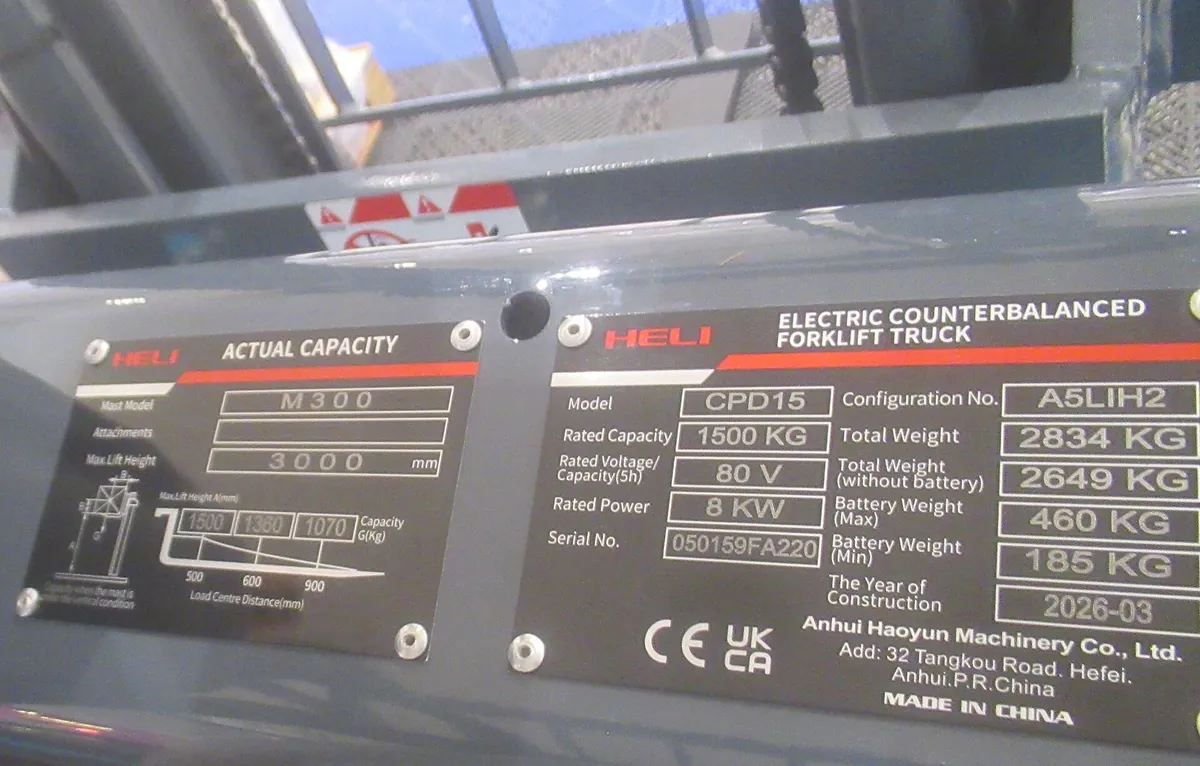
Example from OSHA: a 3,000 lb truck rated at 24 inches can handle 72,000 inch-pounds. A 60-inch crate has a 30-inch load center, so it can weigh at most 2,400 lb. OSHA notes this method comes out lower than what the truck was designed for, which leaves margin. It does not account for lift height, attachments or a load hung off to one side: those are on the data plate or in the manual. Never go over the data plate capacity. 1910.178(o)(2)
Pre-Shift Inspection
Every truck is examined at least daily before it goes into service, and after each shift if it runs around the clock. Defects get reported and fixed right away. 1910.178(q)(7) Do a walk-around with the key off, then an operational check with it running. OSHA eTool: Pre-Operation The full list is on the printable checklist below.
- Key off: fluid levels; leaks, cracks and damage, including hoses and mast chains; tires; forks, including the top clip retaining pin and heel; load backrest; finger guards; decals and nameplate; the operator manual; a clean operator compartment; seat belt and other safety devices.
- Keep your hands out of the mast. Check chain tension with a stick. OSHA eTool: Pre-Operation
- Running: accelerator, inch control, brakes, steering, forward and reverse, tilt, lift and lower, attachments, horn, lights, back-up alarm, hour meter. Report any unusual noise or vibration.
If anything is wrong, do not drive it. The truck comes out of service until it is fixed. 1910.178(p)(1) Write it down and tell your supervisor. Only authorized people make repairs; do not fix it yourself unless you are trained and authorized. 1910.178(q)(1)
Driving
Getting on and starting
- Check your shoes for grease. Grab the handhold, not the steering wheel, which can move and throw you off balance. Getting off is the reverse: do not jump. OSHA eTool: Traveling & Maneuvering
- Fasten the seat belt. OSHA QuickCard 3949
- Make sure the way is clear. Sound the horn or use a spotter if you cannot see. OSHA eTool: Traveling & Maneuvering
On the move
- Speed: always slow enough to stop safely. Follow plant speed limits and traffic rules. Slow down on wet or slippery floors. 1910.178(n)(1), (n)(8), (n)(10)
- Look where you are going. Keep a clear view of your path, and look behind you when reversing. 1910.178(n)(6) Do not hold the overhead guard while reversing; it puts your fingers at risk. OSHA eTool: Traveling & Maneuvering
- Can’t see past the load? Drive with the load trailing. 1910.178(n)(4)
- Horn: slow down and sound it at cross aisles and anywhere your view is blocked. 1910.178(n)(4) Do not count on people hearing a back-up alarm. OSHA eTool: Traveling & Maneuvering
- Following distance: about three truck lengths. Do not pass another truck going the same way at intersections or blind spots. 1910.178(n)(1), (n)(3)
- Forks low: carry the load as low as you can, about 6 to 8 inches off the floor, with the mast tilted back. 1910.178 App. A-7.2 OSHA eTool: Load Handling Do not raise or lower the load while traveling. OSHA QuickCard 3949
- Turns: slow down and turn the wheel smoothly. 1910.178(n)(15) Never turn with the forks raised, and never turn on a slope: a forklift can tip sideways on even a small grade. Stop completely before changing direction. OSHA eTool: Traveling & Maneuvering
- Floors: do not run over loose objects. 1910.178(n)(14) Go around oil and grease (driving through spreads it), and cross bumps and railroad tracks slowly at a 45° angle. OSHA eTool: Physical Conditions Watch posted floor load limits. Even a small bump can knock a raised load off the forks. OSHA eTool: Traveling & Maneuvering
- Overhead: know the height of lights, pipes, sprinklers and doors. 1910.178(m)(8) Coming from bright daylight into a dark building can blind you for a moment; drive in slowly. OSHA eTool: Traveling & Maneuvering
- Railroad tracks: cross diagonally where you can, and never park within 8 feet of the center of the track. 1910.178(n)(5)
- No stunts or horseplay. 1910.178(n)(9) Yield to ambulances, fire trucks and other emergency vehicles. 1910.178(n)(2)
- Indoors with a gas, diesel or propane truck: exhaust builds up in trailers, small rooms and in winter when doors are shut. Shut the engine off when you stay inside a small space like a trailer. Only use a truck rated for the location in hazardous (classified) areas. OSHA eTool: Enclosed and Hazardous Areas 1910.178(m)(11)
Ramps and Grades
The rule: loaded, the load points uphill. Empty, the forks point downhill. Whichever way you are driving. OSHA eTool: Ramps and Grades
| Going up | Going down | |
|---|---|---|
| Loaded | Drive forward, load uphill. Use a spotter if the load blocks your view. | Drive in reverse, looking downhill, load uphill. |
| Empty | Drive in reverse, looking uphill, forks downhill. | Drive forward, forks downhill. |
- On grades over 10 percent, a loaded truck must be driven with the load upgrade. 1910.178(n)(7)(i) Go up and down every grade slowly, load tilted back and just clear of the surface. 1910.178(n)(7), (n)(7)(iii)
- Turn before the ramp so the forks already point the right way. Never turn on it. Stay away from the edge, and do not use a ramp steeper than the manufacturer allows. OSHA eTool: Ramps and Grades
Picking Up and Setting Down Loads
Before you lift
- Handle only stable, safely arranged loads, within the truck’s rated capacity. 1910.178(o)(1), (o)(2) Do not carry a damaged load unless it is wrapped or banded. Put the heaviest part nearest the front wheels. OSHA eTool: Load Handling
- Long or tall loads that change the capacity have to be adjusted for. 1910.178(o)(3) Use the capacity check above.
Picking up
- Approach slowly and stop 8 to 12 inches in front of the load, square to it, forks at the right height. Put the direction control in neutral. Raise or lower the forks only with the truck stopped and the brake set. OSHA eTool: Load Handling
- Level the forks and spread them to center the load. Drive them in as far as they go; forks should be at least two-thirds the length of the load. Watch that the tips do not push into a pallet behind. 1910.178(o)(5) OSHA eTool: Load Handling
- Check overhead clearance. Lift about 4 inches, then tilt back only enough to steady the load against the backrest. 1910.178(o)(6) OSHA eTool: Load Handling
- Back out, stop, and lower to travel height: the bottom of the load 6 to 8 inches off the floor. OSHA eTool: Load Handling
Setting down and stacking
- Creep up to the stack with the inching pedal. Stop squarely, with the brake set before raising. OSHA eTool: Load Handling
- Tilt forward with the load raised only when it is over the rack or stack. Never travel with the load tilted forward; it pushes the load out and makes it less stable. 1910.178(o)(6) OSHA eTool: Load Handling
- Back away, bring the mast vertical, then lower. Heaviest loads go on the bottom tier. OSHA eTool: Load Handling
People Around the Truck
- Nobody under the forks, loaded or empty. 1910.178(m)(2)
- No riders unless the truck has a safe place for them and riding is authorized. 1910.178(m)(3) Never lift people on the forks or a pallet. OSHA QuickCard 3949 OSHA eTool: Pedestrian Traffic
- Never drive up to someone standing in front of a bench or other fixed object. 1910.178(m)(1) Do not put the truck where a lurch forward, a brake failure or the wrong lever would pin someone. OSHA eTool: Traveling & Maneuvering
- Arms and legs inside the truck and out of the mast. 1910.178(m)(4)
- Pedestrians first. Stop and wait for people to pass. Make eye contact. If an area is cluttered, walk the route first. Warn people by horn, signal or light. OSHA eTool: Pedestrian Traffic
- Keep fire aisles, stairways and fire equipment clear. 1910.178(m)(14)
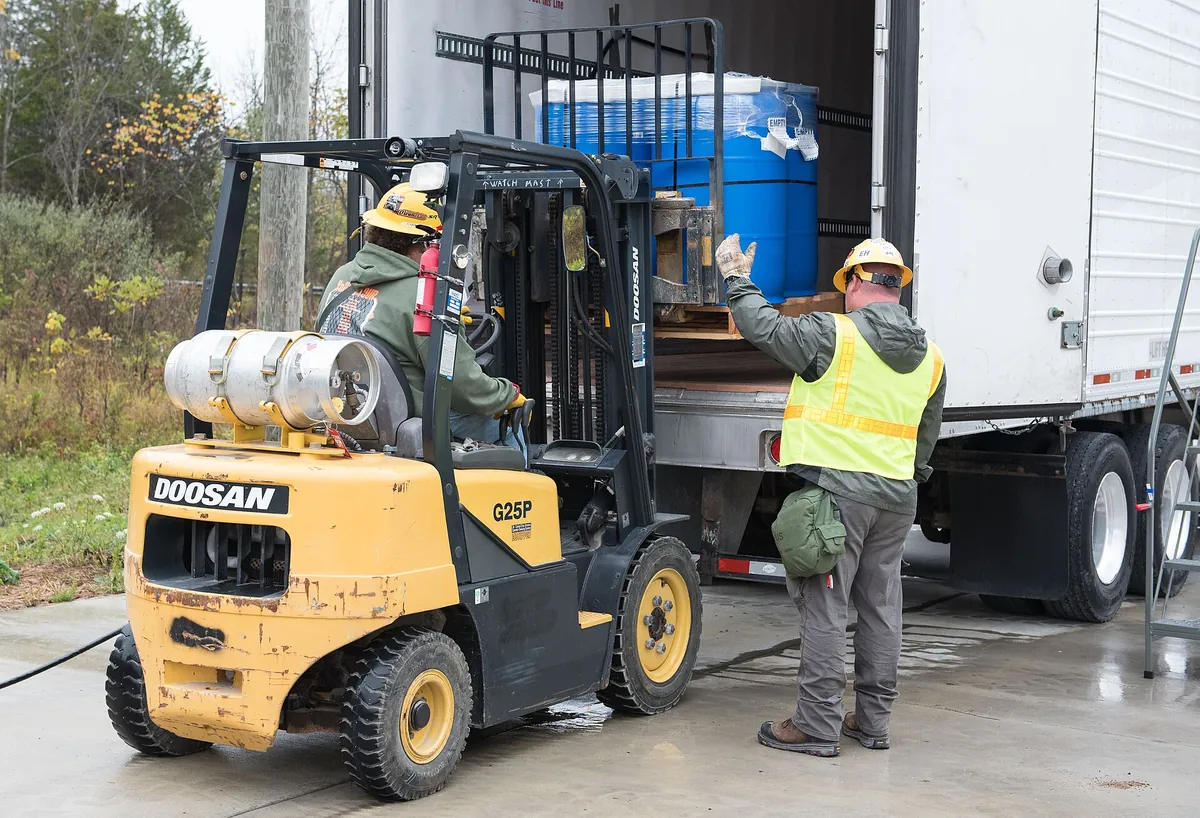
For people on foot: forklifts cannot stop fast, the driver may not see you, and the back end swings wide. Stay clear of working trucks, use the walkways, and never walk under a raised load. OSHA eTool: Pedestrian Traffic
Docks, Trailers and Elevators
- Dock edges: falls off a loading dock in a forklift can be fatal. Keep a safe distance from the edge and watch your tail swing. OSHA eTool: Loading Docks 1910.178(m)(6)
- Trailers and rail cars: brakes set and wheel blocks in place before loading or unloading. 1910.178(m)(7) Highway trailers get wheel chocks under the rear wheels. 1910.178(k)(1) A trailer not coupled to a tractor may need fixed jacks. 1910.178(m)(7)
- Check the floor of the trailer or rail car for breaks and weakness before driving on. 1910.178(m)(7) Use lights in a dark trailer and sound the horn going in and out. OSHA eTool: Load Handling
- Dockboards and bridge plates: secured before you drive on, driven over slowly and straight, never over their rated capacity. 1910.178(n)(11) OSHA eTool: Load Handling
- Not a door opener: do not open or close freight doors with the truck. 1910.178(m)(6)
- Elevators: approach slowly and drive on squarely once the car is level. Inside: controls neutral, power off, brake set. 1910.178(n)(12)
If the Truck Tips
Sit-down counterbalanced truck: DON’T JUMP. Stay in the seat. Hold tight to the steering wheel. Brace your feet. Lean away from the impact. Lean forward. OSHA eTool: Traveling & Maneuvering
Wear the seat belt every time the truck has one. OSHA QuickCard 3949 Stand-up trucks are different: on a stand-up truck with rear entry, step backward off the truck if it tips. Follow the manual for any other type. OSHA eTool: Traveling & Maneuvering
Parking and Leaving the Truck
- Leaving it unattended (25 feet or more away, or out of your sight): forks fully lowered, controls in neutral, power off, brake set, and wheels blocked if on an incline. 1910.178(m)(5)(i), (m)(5)(ii)
- Getting off within 25 feet and in sight: forks fully lowered, controls in neutral and brake set. Power may stay on. 1910.178(m)(5)(iii)
- Pick a hard, level spot, in an authorized area. Do not block aisles, exits, stairways or fire equipment. Tilt the mast forward slightly so the fork tips touch the floor. Turn the key off and take it with you. Get off without jumping. OSHA eTool: Traveling & Maneuvering
Fuel, Propane and Batteries
- Do not fill a fuel tank with the engine running. Wash away or let evaporate any spill, and put the cap back on before restarting. 1910.178(p)(2), (p)(3)
- Do not run a truck with a fuel leak. 1910.178(p)(4)
- No open flames to check battery electrolyte or gasoline level. 1910.178(p)(5)
- Check electrolyte with a face shield, rubber apron and rubber gloves. Check propane tanks and fittings with a face shield, long sleeves and gauntlet gloves. OSHA eTool: Pre-Operation
- A truck that throws sparks or flames from its exhaust, or runs hotter than normal, comes out of service until the cause is fixed. 1910.178(q)(8), (q)(9)
Check Yourself
Tap a question to see the answer.
1. Can you get forklift certified just by finishing an online course?
No. OSHA training is three parts: formal instruction (which may be online), hands-on practice and an evaluation of you driving in the workplace. The employer certifies you after all three. 1910.178(l)(2)(ii)
2. Your truck’s data plate says 3,000 lb at a 24-inch load center. The load is an even crate 60 inches long. What is the most it may weigh?
2,400 lb. Load center is half of 60 = 30 inches. 3,000 × 24 = 72,000 in-lb, divided by 30 = 2,400 lb. 1910.178 App. A-5.3
3. You are carrying a load down a ramp. Which way do you face?
Drive in reverse, looking downhill, with the load pointed up the ramp. Loaded: the load always points uphill. OSHA eTool: Ramps and Grades
4. You are empty and going up a ramp. Which way?
In reverse, forks pointed downhill. Empty: the forks always point downhill. OSHA eTool: Ramps and Grades
5. The load blocks your view forward. What do you do?
Travel with the load trailing (drive in reverse), or use a spotter. 1910.178(n)(4)
6. A sit-down counterbalanced truck starts to tip. What do you do?
Don’t jump. Stay in the seat, hold tight to the wheel, brace your feet, lean away from the impact and lean forward. OSHA eTool: Traveling & Maneuvering
7. When is a truck “unattended”?
When you are 25 feet or more away, even if you can see it, or whenever it is out of your sight. Then forks fully down, controls neutral, power off, brake set, wheels blocked on an incline. 1910.178(m)(5)
8. How close may you park to the center of a railroad track?
No closer than 8 feet. 1910.178(n)(5)
9. How often must an operator be evaluated?
At least once every three years, and sooner after an accident or near miss, unsafe driving, a failed evaluation, a different type of truck or a change in the workplace. 1910.178(l)(4)
10. The pre-shift check finds a hydraulic leak. Can you drive it carefully to the shop?
No. A truck that is unsafe in any way comes out of service until it is fixed, and only authorized people repair it. Report it right away. 1910.178(p)(1), (q)(1)
Printable Daily Checklist
One sheet per truck each day, or each shift if it runs around the clock. The items are OSHA’s pre-operation and operational checks; add anything your truck’s manual lists. OSHA eTool: Pre-Operation
| Check | OK | Problem found |
|---|---|---|
| Key off: walk-around | ||
| Fluid levels: oil, water (coolant), hydraulic fluid | ||
| Leaks, cracks or other damage, including hydraulic hoses and mast chains (check chain tension with a stick, not your hand) | ||
| Tires: condition and pressure, cuts and gouges | ||
| Forks: condition, top clip retaining pin and heel | ||
| Load backrest extension | ||
| Finger guards | ||
| Safety decals and nameplate in place and readable; nameplate matches the model, serial number and attachments | ||
| Operator manual on the truck and readable | ||
| Operator compartment free of grease and debris | ||
| Safety devices work, including the seat belt | ||
| Electric trucks | ||
| Cables and connectors: no frayed or bare wires | ||
| Battery restraints | ||
| Electrolyte levels (face shield, rubber apron, rubber gloves) | ||
| Hood latch | ||
| Gas, diesel and propane trucks | ||
| Engine oil | ||
| Brake reservoir | ||
| Engine coolant and radiator | ||
| Air filter | ||
| Belts and hoses | ||
| Hood latch | ||
| Propane tank (face shield, long sleeves, gauntlet gloves) | ||
| Tank properly mounted; restraint brackets in place | ||
| Pressure relief valve pointing up | ||
| Hose and connectors | ||
| Tank free of dents and cracks | ||
| Tank fits within the profile of the truck | ||
| No leaks | ||
| Engine running or power on | ||
| Accelerator linkage | ||
| Inch control (if equipped) | ||
| Brakes | ||
| Steering | ||
| Drive control: forward and reverse | ||
| Tilt control: forward and back | ||
| Hoist and lowering control | ||
| Attachment control | ||
| Horn | ||
| Lights | ||
| Back-up alarm (if equipped) | ||
| Hour meter | ||
| No unusual noises or vibrations | ||
Anything not OK: do not drive it. Take the truck out of service, write the problem down and tell your supervisor right away. Only authorized people make repairs. Add any checks your truck’s operator manual lists.
Printable Evaluation Form
For the person evaluating a new operator on the job, on the truck they will drive. It records what OSHA requires in a certification: operator name, training date, evaluation date and who trained and evaluated. 1910.178(l)(6) Use the blank rows for things specific to your workplace, like docks, racking or a ramp.
| Watched the operator do this, at this workplace, on this truck | Yes | Needs work |
|---|---|---|
| Before moving | ||
| Does the pre-shift inspection and writes up problems | ||
| Mounts using the handhold, not the steering wheel; does not jump off | ||
| Wears the seat belt | ||
| Checks the path is clear before moving | ||
| Driving | ||
| Looks in the direction of travel; looks behind when reversing | ||
| Slows down and sounds the horn at cross aisles, doorways and blind spots | ||
| Speed lets the truck stop safely; slows for wet floors and turns | ||
| Allows for tail swing; turns smoothly, never with forks raised | ||
| Travels with forks low and tilted back | ||
| Drives in reverse when the load blocks the view | ||
| Ramps: load pointed uphill when loaded, forks pointed downhill when empty; no turning on a grade | ||
| Keeps about three truck lengths behind other trucks | ||
| Avoids spills, holes and loose objects; crosses bumps and tracks at an angle | ||
| Handling loads | ||
| Checks the weight against the data plate capacity and load center | ||
| Approaches square, stops 8 to 12 inches from the load | ||
| Forks level, spread to center the load, as far under it as they go | ||
| Checks overhead clearance before lifting | ||
| Lifts a few inches, tilts back only enough to steady the load | ||
| Does not raise or lower the load while traveling | ||
| Tilts forward with the load up only over the rack or stack | ||
| Brings the mast vertical before lowering; sets the load down square | ||
| People and the workplace | ||
| Yields to pedestrians; stops and waits for them to pass | ||
| Lets no one stand or walk under the forks | ||
| Carries no riders; never lifts people on the forks | ||
| Keeps arms and legs inside the truck | ||
| Docks and trailers: brakes set and wheels chocked, floor checked, stays back from the edge | ||
| Parking | ||
| Forks fully down, controls in neutral, brake set | ||
| Power off and key out when leaving the truck unattended | ||
| Parks clear of aisles, exits, stairs and fire equipment; blocks wheels on an incline | ||
| This workplace | ||
Result: ☐ Competent to operate the truck type(s) above ☐ Needs more training before driving alone
I certify this operator was trained and evaluated as required by 29 CFR 1910.178(l). Re-evaluate by (3 years at most): ____________
Common Questions
Is there a forklift license?
Not a government one. Under OSHA the employer certifies each operator after training and an evaluation on the job. The certification lists the operator’s name, the training date, the evaluation date and who did the training or evaluation.
Can I get forklift certified online?
Only part of it. Online or video learning can cover the formal instruction. OSHA also requires hands-on practice and an evaluation of the operator driving in the workplace, done by someone with the knowledge, training and experience to judge it. This guide covers the classroom part.
Does my certification carry over to a new job?
The training can. If you were already trained in a topic and it fits the new truck and workplace, you do not need that topic again, but the new employer still has to evaluate you, find you competent and certify you.
How often does forklift certification need to be renewed?
Each operator gets evaluated at least once every three years. Refresher training is needed sooner after unsafe driving, an accident or near miss, a poor evaluation, a move to a different type of truck, or a change in the workplace.
How old do you have to be to drive a forklift?
18 for most non-farm work. Federal youth employment rules bar most workers under 18 from operating forklifts outside agriculture.
Do forklift operators have to wear a seat belt?
OSHA’s guidance is to always wear the seat belt when the truck has one.
Who can train and evaluate forklift operators?
Someone with the knowledge, training and experience to train operators and judge their competence. Employers can run their own program; OSHA’s forklift eTool has a section on developing one.
Sources and Limits
Everything on this page was read from these sources on November 24, 2026:
- 29 CFR 1910.178, Powered Industrial Trucks, with its non-mandatory Appendix A on stability: the Electronic Code of Federal Regulations (ecfr.gov), current as of November 20, 2026.
- OSHA Powered Industrial Trucks (Forklift) eTool: osha.gov/etools/powered-industrial-trucks. Pages cited above as “OSHA eTool.”
- OSHA QuickCard 3949, Safe Forklift Operation; OSHA Alert 3973; and SHIB 03-09-30, Prohibition Against Young Workers Operating Forklifts: osha.gov/powered-industrial-trucks. OSHA also publishes sample daily checklists there.
What this page does not do: it does not certify anyone, and it does not replace the operator manual for your truck or your employer’s rules. It covers general industry (29 CFR 1910). It does not cover the details of stand-up, narrow-aisle, order-picker or rough-terrain trucks, lifting people, attachments, or battery changing and charging rooms. Rules change; if the date above is old, check the current text.