Zoo Caging at a Glance
Zoo caging refers to the engineered enclosure systems used to safely contain animals while supporting their health, natural behaviors, daily care, and long-term welfare. Modern zoo caging goes beyond traditional cages by combining structural engineering, animal welfare principles, and specialized safety features such as keeper doors, shift gates, holding areas, and custom-fabricated steel components.
Introduction
Search for "zoo caging" and you'll quickly find it means different things to different people. Some picture the steel-bar cages of older zoos; others think of sprawling naturalistic habitats that mimic an animal's native range. Professionals know it's neither extreme — modern zoo caging is a carefully engineered system that folds safety, functionality, and animal welfare into a single design.
Today's zoos have evolved far beyond simply containing animals. Enclosures must protect visitors, provide safe working conditions for animal care staff, support veterinary procedures, encourage species-specific behaviors, and withstand years of demanding use in outdoor environments. Every decision — from the placement of a keeper door to the type of steel mesh used — contributes to the success of the entire habitat.
This shift reflects a broader change in zoological philosophy. Instead of asking "How do we keep animals inside?", today's designers ask "How do we create secure environments where animals can thrive while keepers work safely and efficiently?" — and the answer lies in thoughtful enclosure design, precision engineering, and custom fabrication.
In this guide, you'll learn what zoo caging really means, how modern enclosure systems are designed, the components that make them work, and why custom-fabricated solutions have become essential for zoos, wildlife parks, sanctuaries, and conservation facilities around the world.
What Is Zoo Caging?
At its simplest, zoo caging is the design and construction of secure containment systems for animals in zoological parks, wildlife sanctuaries, rehabilitation centres, conservation facilities, and research institutions. But reducing it to "building cages" misses how much modern enclosure design actually involves.
A professionally designed zoo enclosure is an integrated system that balances four essential objectives:
- Animal Welfare — Providing an environment that supports natural behaviors, physical health, and psychological well-being.
- Keeper Safety — Allowing zoo staff to carry out feeding, cleaning, maintenance, and veterinary procedures with minimal risk.
- Public Safety — Preventing escapes while ensuring visitors can observe animals safely.
- Operational Efficiency — Making daily animal management, maintenance, and emergency response as effective as possible.
To achieve these goals, modern zoo enclosure systems incorporate far more than structural barriers. Depending on the species and facility requirements, a complete system may include:
- Structural steel framing
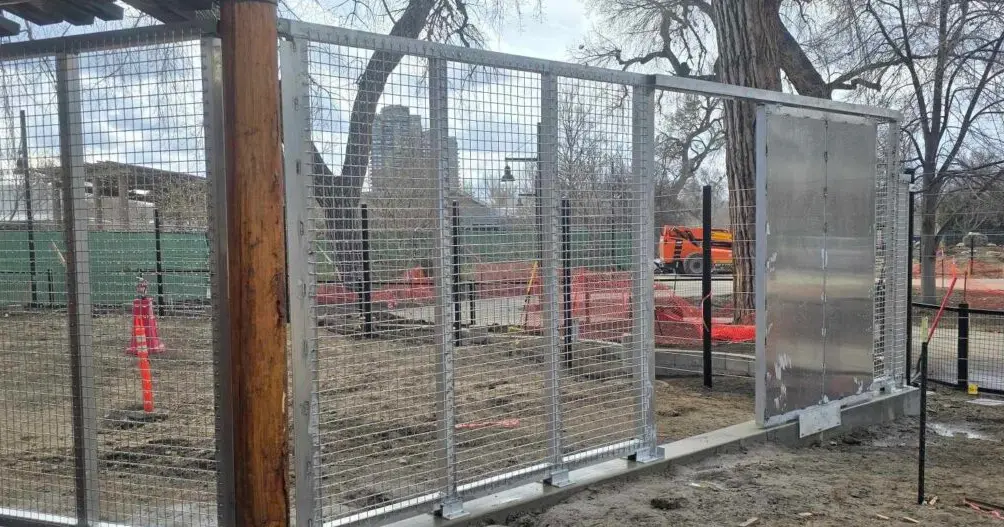
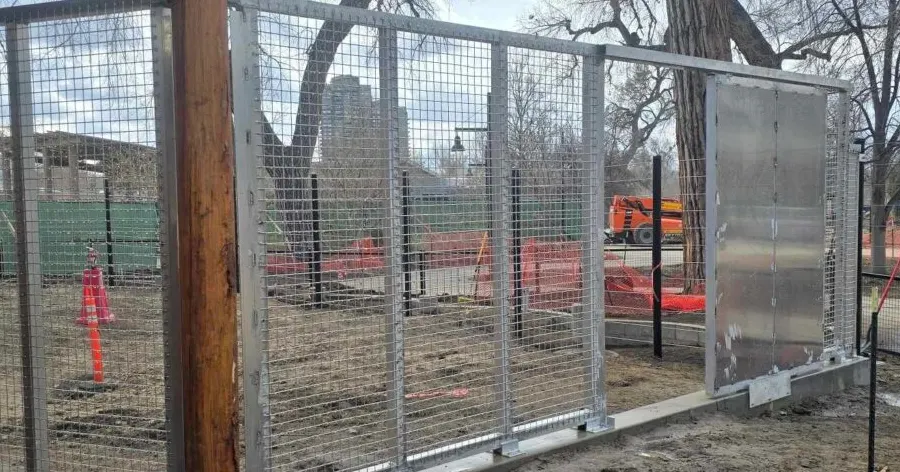
- Heavy-duty welded mesh
- Keeper access doors
- Shift gates
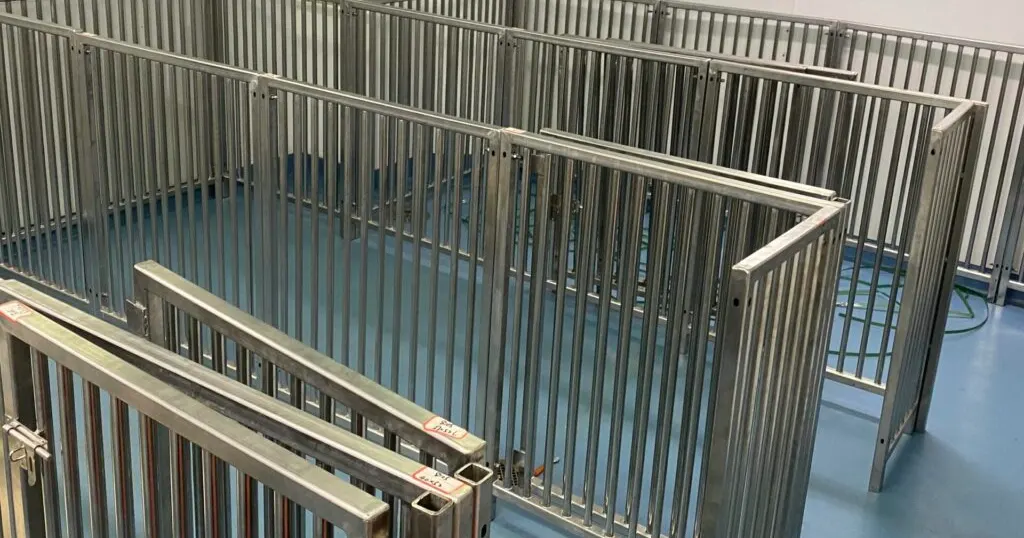
- Holding areas
- Transfer raceways
- Squeeze cages
- Feeding ports
- Observation windows
- Roof systems
- Specialized locking mechanisms
- Enrichment features
Each component serves a specific purpose, but together they create a habitat that supports both the animals living inside it and the professionals responsible for their care.
Unlike standardized fencing systems, zoo caging is almost always custom designed. The requirements for a tiger enclosure differ dramatically from those of a primate habitat, bird aviary, reptile house, or elephant facility. Species-specific behaviors, climbing ability, strength, social structure, environmental needs, and husbandry practices all influence the final design.
This is why custom fabrication has become an essential part of modern zoo enclosure projects. Rather than adapting animals to fit standard products, today's enclosures are engineered around the animals themselves.
Why Modern Zoos No Longer Think in Terms of Traditional Cages
The image of an animal behind steel bars still shapes how many people think about zoos. While those enclosures were once common, they no longer represent the standard for modern zoological facilities.
Today, accredited zoos and wildlife parks increasingly focus on creating habitats that reflect the natural environments and behavioral needs of the species they house. Research in animal welfare has shown that enclosure design can influence activity levels, stress, behavioral diversity, and overall well-being. As a result, modern enclosure planning extends far beyond containment — it aims to create environments where animals can express natural behaviors while remaining safe and well cared for.
This evolution has changed how enclosure systems are designed. Instead of asking only whether a barrier is strong enough, designers now consider questions such as:
- Does the enclosure encourage species-specific behaviors?
- Can animals retreat from public view when needed?
- Is there adequate space for movement and enrichment?
- Can keepers safely perform daily husbandry tasks?
- Are veterinary procedures supported without unnecessary stress?
- Can the enclosure adapt to future operational needs?
These considerations have transformed zoo caging from a simple containment solution into a multidisciplinary field that combines engineering, architecture, animal behavior, veterinary science, and fabrication.
For fabrication specialists, this means every enclosure component must do more than withstand physical loads. It must also integrate seamlessly into a larger system that supports the daily lives of animals and the professionals who care for them.
Types of Zoo Enclosures
Because every species brings its own strength, behavior, and habitat needs, zoo enclosure design is rarely one-size-fits-all. Most professional projects fall into a handful of enclosure types, each with distinct structural and safety priorities. The table below maps the common types to the species they typically house and what drives their design.
| Enclosure type | Typical species | Primary design priorities |
|---|---|---|
| Big cat enclosures | Lions, tigers, leopards | High-tensile mesh, containment strength, standoff barriers, secure shift gates |
| Primate enclosures | Monkeys, apes, lemurs | Climb-rated mesh, escape-proof detailing, vertical space, enrichment anchors |
| Aviaries | Birds of prey, parrots, waterfowl | Fine mesh or netting, flight volume, corrosion-resistant framing |
| Hoofstock & large mammals | Elephants, giraffe, rhino | Heavy structural steel, robust gates, durable substrate barriers |
| Reptile enclosures | Crocodiles, large lizards, snakes | Thermal control, secure glazing, low-clearance mesh, water containment |
| Holding & transfer systems | All species (back-of-house) | Shift gates, squeeze cages, raceways, keeper-safe access |
These categories often overlap on a single site. A mixed-species facility may need aviary netting, a big-cat containment barrier, and a hoofstock gate system engineered to work together — which is why most are custom-fabricated zoo enclosures rather than off-the-shelf products.
The Essential Components of a Modern Zoo Enclosure System
A modern zoo enclosure is much more than a secure barrier surrounding an exhibit. It is a carefully planned system of interconnected components that allow animals to thrive while enabling zoo professionals to manage daily operations safely and efficiently.
Every door, gate, panel, and structural element has a specific purpose. Together, they create an environment that supports animal welfare, simplifies routine husbandry, and provides the flexibility needed for veterinary care, maintenance, and emergency situations.
Although enclosure layouts vary depending on the species and facility, most professional zoo caging systems are built around several core components.
Keeper Doors: Safe Access Without Direct Contact
Keeper doors are one of the most frequently used components of any zoo enclosure system. They provide authorized staff with controlled access to service areas while maintaining a secure separation between people and animals.
Unlike ordinary industrial doors, keeper doors are designed specifically for zoological applications. They are engineered to withstand repeated daily use, resist heavy loads, and incorporate reliable locking mechanisms that reduce the risk of accidental access.
The design of a keeper door depends largely on the species it serves. For example, a keeper door used in a primate habitat may prioritize visibility and ease of operation, while one installed in a large carnivore enclosure requires reinforced construction, multiple locking points, and additional safety features.
Proper placement is equally important. Positioning keeper doors within the enclosure's operational workflow allows zoo staff to feed animals, clean exhibits, replace enrichment devices, and perform inspections while minimizing stress and unnecessary interaction.
Ultimately, a well-designed keeper door improves both efficiency and safety, making routine husbandry more predictable and reducing operational risk.
Shift Gates: Managing Animal Movement Safely
Moving animals between different sections of an enclosure is a routine part of zoo management. Whether cleaning an exhibit, performing maintenance, introducing enrichment, or preparing for veterinary examinations, keepers often need a safe way to guide animals from one area to another.
Shift gates make this possible. A shift gate is a movable barrier that temporarily separates different spaces within an enclosure, allowing animals to be transferred without direct human contact.
Depending on the enclosure design, shift gates may connect:
- Primary exhibits
- Holding areas
- Night quarters
- Veterinary spaces
- Transfer corridors
- Breeding facilities
Because these gates are operated frequently, they must function smoothly while remaining strong enough to withstand repeated use and species-specific forces.
Their design also contributes to animal welfare. Familiar movement routines and predictable pathways help reduce stress during transfers, making everyday management safer and more efficient for both animals and keepers.
Holding Areas: The Operational Hub Behind Every Exhibit
Visitors typically see only the public-facing exhibit, but behind nearly every modern enclosure is a network of holding areas that support daily zoo operations.
Holding areas provide temporary accommodation when animals need to be separated for cleaning, breeding management, veterinary observation, exhibit maintenance, or transportation. These spaces are designed to be secure, comfortable, and easily accessible from multiple parts of the enclosure.
An effective holding area often connects directly to:
- Shift gates
- Keeper doors
- Veterinary handling systems
- Feeding access points
- Transfer raceways
This integrated design allows zoo staff to carry out essential tasks without disrupting the animals more than necessary. Although hidden from public view, holding facilities are among the most important spaces in any professionally designed zoo enclosure.
Squeeze Cages: Supporting Safe Veterinary Care
Routine health care is an essential part of responsible animal management. However, physically handling large or potentially dangerous animals can present significant risks.
Squeeze cages provide a safe and humane solution. These specialized restraint systems are designed to temporarily limit an animal's movement during veterinary procedures such as physical examinations, vaccinations, blood collection, ultrasound imaging, or minor medical treatments.
Modern squeeze cages are engineered with adjustable restraint systems that provide sufficient control while minimizing discomfort and stress.
Species-specific design is particularly important. A squeeze cage built for large felines differs considerably from one intended for hoofstock or bears, reflecting differences in body structure, behavior, and handling requirements.
By integrating squeeze cages into the overall enclosure system, zoological facilities can improve veterinary access while reducing unnecessary anesthesia and enhancing the safety of both animals and veterinary teams.
Enrichment Features: Designing for Natural Behavior
Modern zoo enclosure design extends beyond physical containment. Animals also require environments that encourage exploration, exercise, and species-appropriate behaviors. Environmental enrichment plays a vital role in achieving these goals.
Enrichment features are designed to stimulate an animal's natural instincts through activities such as climbing, foraging, scent exploration, problem-solving, or play. Examples include:
- Feeding devices
- Climbing structures
- Puzzle feeders
- Elevated platforms
- Scratching posts
- Water features
- Enrichment boxes
Rather than serving as optional additions, these features have become an integral part of enclosure planning.
Research has shown that enrichment can encourage behavioral diversity, reduce repetitive behaviors, and contribute positively to overall animal welfare. For this reason, modern zoo caging systems increasingly incorporate enrichment opportunities directly into the structural design of the enclosure instead of adding them later.
Mesh Systems: More Than Just a Barrier
Steel mesh is often the most recognizable feature of a zoo enclosure, but selecting the right mesh involves much more than choosing a material with adequate strength.
An effective zoo mesh system must balance several competing requirements. It needs to:
- Safely contain the animal
- Provide clear visibility for visitors
- Allow adequate airflow
- Resist corrosion and weathering
- Minimize maintenance
- Withstand species-specific behaviors such as climbing, chewing, or pulling
The appropriate wire diameter, mesh opening size, framing method, and attachment system all depend on the species being housed and the intended function of the enclosure.
For example, primates often require mesh that supports climbing, while large carnivores demand heavier structural reinforcement capable of resisting significant forces.
Because mesh systems are one of the enclosure's primary structural elements, precision fabrication and quality welding are essential for long-term durability and safety.
Structural Steel: The Framework Behind Every Enclosure
Behind every keeper door, shift gate, and mesh panel lies the structural framework that holds the entire enclosure together.
Structural steel provides the strength and stability needed to support both permanent and movable enclosure components. It allows engineers to create custom layouts that accommodate different exhibit sizes, species requirements, and operational workflows.
High-quality fabrication ensures that every structural element fits accurately during installation, reducing construction issues while improving long-term reliability.
When combined with appropriate corrosion protection and engineering standards, structural steel offers the durability needed for zoological facilities expected to operate for decades.
Modern Zoo Enclosures Function as Complete Systems
Each component matters on its own, but the real value shows up in how they work together. A shift gate is far more useful wired to well-designed holding areas; keeper doors get safer paired with secure locking; structural steel carries the whole enclosure while enrichment turns a secure box into a space an animal actually wants to move through.
This systems-based approach is what distinguishes modern zoo caging from traditional animal containment. Rather than treating each component as a separate product, today's enclosures are engineered as unified environments that support animal welfare, operational efficiency, and long-term facility performance.
Balancing Animal Welfare, Safety, and Engineering
Modern zoo enclosure systems are expected to accomplish much more than securely contain animals. Every enclosure must support the physical and psychological well-being of its inhabitants while allowing zoo professionals to perform their daily responsibilities safely and efficiently.
Achieving this balance requires thoughtful planning, engineering expertise, and a thorough understanding of animal behavior. Every structural component — from a mesh panel to a shift gate — must work together as part of a larger system that supports both the animals and the people responsible for their care.
Rather than viewing safety and animal welfare as competing priorities, modern enclosure design recognizes that the two are closely connected. An enclosure that reduces stress, improves daily management, and allows keepers to work safely ultimately creates a better environment for everyone.
Designing Around Animal Welfare
Animal welfare has become one of the defining principles of modern zoo design. Accredited zoological institutions increasingly focus on creating environments that allow animals to express natural behaviors while maintaining the highest standards of health and safety.
This approach extends far beyond providing adequate space.
When designing an enclosure, professionals consider how animals naturally interact with their environment. Some species spend much of their time climbing, while others dig, swim, perch, forage, or patrol large territories. These behaviors influence everything from enclosure dimensions to structural layout and enrichment opportunities.
A well-designed habitat encourages animals to:
- Explore their surroundings
- Exercise naturally
- Rest in secure locations
- Interact with environmental enrichment
- Retreat from public view when desired
- Display species-specific behaviors
Research has shown that enclosure complexity plays an important role in promoting behavioral diversity and reducing stress-related behaviors. Instead of creating environments focused solely on containment, modern zoos aim to provide habitats that are engaging, adaptable, and responsive to the needs of each species.
For this reason, enclosure systems are often designed in close collaboration with animal care professionals, veterinarians, architects, and engineers to ensure that every element contributes to the animal's overall well-being.
Keeper Safety Is Built Into the Design
Zoo professionals perform hundreds of routine tasks every week, including feeding, cleaning, maintenance, behavioral observations, habitat modifications, veterinary assistance, and emergency response. Many of these activities take place in close proximity to potentially dangerous animals.
Modern zoo caging addresses this challenge through protected contact management, a philosophy that minimizes direct interaction between keepers and animals whenever possible.
Rather than relying on physical restraint or unnecessary risk, protected contact uses engineered barriers and controlled access systems to create safe working procedures. This is why enclosure components such as keeper doors, shift gates, holding areas, and squeeze cages are so important.
Together, they allow zoo staff to:
- Move animals safely between spaces
- Perform exhibit maintenance
- Conduct health inspections
- Deliver food and enrichment
- Isolate animals when necessary
- Respond quickly during emergencies
Thoughtful enclosure planning not only reduces workplace risks but also creates predictable routines that many animals become familiar with over time, reducing stress during daily management activities.
Veterinary Care Starts With Good Enclosure Design
Providing excellent veterinary care requires more than experienced veterinarians. It also depends on having enclosure systems that allow animals to be observed, examined, and treated safely.
Routine health checks, vaccinations, blood sampling, and diagnostic procedures all become more efficient when enclosures include dedicated veterinary handling features. Instead of designing these systems as afterthoughts, modern zoo projects incorporate them from the earliest planning stages.
Features commonly integrated into veterinary workflows include:
- Shift gates for controlled animal movement
- Holding areas for observation
- Squeeze cages for safe restraint
- Service corridors for staff access
- Viewing panels for behavioral monitoring
By integrating these features into the enclosure itself, facilities reduce unnecessary handling while improving both safety and animal welfare.
Materials Used in Modern Zoo Caging
Even the most inventive enclosure design comes down to one thing in the end: the quality of the materials it's built from. Zoo enclosures live outdoors, taking years of rain, sun, humidity, cleaning chemicals, and constant contact with powerful animals — so choosing the right material for each job is essential to how long the whole thing lasts.
Structural Steel
Structural steel is the foundation of most modern zoo enclosure systems. Its strength lets engineers build frameworks that carry mesh panels, keeper doors, elevated platforms, transfer systems, roofing, and specialized containment equipment — though the metal isn't always steel: on our Denver Zoo Australia exhibit we TIG-welded the cassowary enclosure in aluminium, where a lighter, naturally corrosion-resistant frame suited both the bird and the setting.
Steel also offers tremendous flexibility during fabrication, making it possible to produce custom components that fit complex architectural layouts without compromising structural integrity. When properly engineered and protected against corrosion, structural steel provides decades of reliable performance.
Stainless Steel and Galvanized Steel
One of the most common decisions during fabrication is selecting between stainless steel and galvanized steel. Both materials provide excellent durability, but each offers advantages depending on the application.
Stainless steel is widely valued for its corrosion resistance, clean appearance, and low maintenance requirements. It is often selected for components exposed to moisture or environments where hygiene is especially important.
Galvanized steel provides an economical alternative while still offering strong corrosion protection through its zinc coating. It is commonly used for structural members, framing systems, and many outdoor enclosure applications.
The choice between these materials depends on several factors, including:
- Species requirements
- Environmental conditions
- Budget
- Maintenance expectations
- Project lifespan
Professional fabricators evaluate these considerations carefully to recommend materials that balance performance, durability, and cost.
Welded Mesh Systems
Mesh is one of the defining features of many zoo enclosures, but not all mesh systems are created equally. The correct mesh specification depends on factors such as:
- Animal size and strength
- Climbing behavior
- Bite force
- Visibility requirements
- Ventilation
- Maintenance access
- Long-term durability
Selecting the appropriate wire diameter, opening size, and framing method helps ensure the enclosure remains secure while supporting the operational needs of the facility.
Equally important is fabrication quality. Precision welding, accurate alignment, and secure attachment methods contribute significantly to the overall safety and lifespan of the enclosure.
Protective Finishes and Corrosion Resistance
Zoo enclosure systems represent long-term investments, often expected to remain in service for decades. Protective finishes help preserve structural integrity by reducing corrosion caused by weather exposure, humidity, and routine cleaning.
Depending on the project, protective measures may include:
- Hot-dip galvanizing
- Powder coating
- Specialized industrial coatings
- Stainless steel fabrication
- Proper drainage design
These measures reduce maintenance requirements while helping ensure the enclosure continues performing safely throughout its service life.
Zoo Enclosure Materials Compared
Most decisions come down to how a material balances corrosion resistance, cost, and maintenance for a given species and climate. This comparison summarizes where each option fits.
| Material | Corrosion resistance | Relative cost | Best suited to | Maintenance |
|---|---|---|---|---|
| Structural (carbon) steel | Low unless coated | $ | Load-bearing frames, gates, platforms | Needs galvanizing or coating; periodic inspection |
| Galvanized steel | High (zinc barrier) | $$ | Outdoor framing and mesh in most climates | Low; touch up damaged coating |
| Stainless steel | Very high | $$$ | Wet, humid, or hygiene-critical areas; holding pens | Very low |
| Aluminium | High (naturally) | $$$ | Lightweight frames where weight matters, such as aviaries | Low; requires skilled TIG welding |
The right choice is the one matched to the job, not a default — which is why a single facility might combine galvanized framing, stainless holding pens, and an aluminium aviary in one project.
Why Custom Fabrication Matters
No two zoo enclosure projects are exactly alike. A habitat for snow leopards has fundamentally different structural and operational demands than one built for orangutans, elephants, reptiles, or birds — and even two facilities housing the same species can need completely different layouts depending on available space, climate, husbandry practices, breeding programs, or visitor-experience goals.
That's why custom fabrication has become the default for modern zoo enclosure construction. Rather than forcing a facility to adapt to standardized products, it lets each enclosure be engineered around the animals' needs, the keepers' workflows, and the institution's goals — and it shapes how each enclosure is built, from engineering drawings through welding, finishing, and installation.
Every detail — from the placement of a keeper door to the dimensions of a shift gate or the specification of a mesh panel — can be tailored to improve safety, functionality, and long-term performance.
Custom fabrication also offers greater flexibility for future expansion, enclosure upgrades, and evolving animal management practices. For zoological facilities investing in infrastructure that may remain in service for decades, this adaptability is just as valuable as structural strength.
Ultimately, the best zoo enclosure systems are not simply fabricated — they are thoughtfully engineered, carefully planned, and built to support the people and animals who rely on them every day.
Choosing the Right Zoo Enclosure Fabrication Partner
Designing a modern zoo enclosure requires expertise from multiple disciplines. Architects, engineers, veterinarians, animal care professionals, and fabricators all play important roles in creating an environment that is safe, durable, and suited to the needs of each species.
While enclosure design begins with understanding the animals, successful projects depend on selecting a fabrication partner capable of turning those plans into reliable, long-lasting structures.
A zoo enclosure is a long-term investment. Decisions made during fabrication can influence maintenance costs, operational efficiency, and safety for decades. Choosing the right partner therefore involves more than comparing prices — it means evaluating experience, engineering capabilities, manufacturing quality, and a commitment to precision.
When assessing potential fabrication companies, consider the following factors.
Experience With Custom Zoo Enclosure Systems
Zoo enclosures are highly specialized structures.
Unlike standard commercial fencing or industrial steelwork, every enclosure must accommodate the unique characteristics of the species it will house while supporting the day-to-day operations of the facility.
An experienced fabrication company understands that no two projects are identical. Whether constructing a mesh enclosure for primates, a transfer system for large carnivores, or a holding area for hoofstock, every component should be designed around the enclosure's intended purpose rather than adapted from generic products.
Engineering and Precision Fabrication
High-quality enclosure systems begin long before fabrication starts. Accurate engineering, detailed manufacturing drawings, material selection, and quality control all contribute to the finished product.
Precision fabrication helps ensure:
- Structural components fit correctly during installation
- Gates operate smoothly over years of use
- Mesh panels align accurately
- Locking systems function reliably
- Maintenance requirements remain low
Small manufacturing inaccuracies can become significant operational challenges once an enclosure is in daily use. Investing in precision from the beginning helps reduce costly modifications later.
Durability for Long-Term Performance
Zoo enclosure systems are expected to perform in demanding environments. Exposure to weather, humidity, cleaning chemicals, and constant interaction with animals places significant stress on structural components throughout their service life.
Durability should therefore be a primary consideration during fabrication. Key factors include:
- Appropriate material selection
- Corrosion protection
- Professional welding practices
- Structural integrity
- High-quality hardware
- Ease of maintenance
A well-fabricated enclosure not only lasts longer but also contributes to safer daily operations and lower lifecycle costs.
Collaboration Throughout the Project
Successful zoo enclosure projects rely on effective collaboration. Fabricators often work alongside architects, exhibit designers, contractors, engineers, and zoo personnel to ensure every component integrates seamlessly into the overall enclosure.
Open communication throughout the project helps identify potential issues before fabrication begins, reducing delays during construction and minimizing costly revisions.
The best outcomes are achieved when fabrication is treated as part of the design process — not simply the final manufacturing stage.
Why Custom Fabrication Delivers Better Long-Term Value
As zoos continue to evolve, enclosure systems must evolve with them. Facilities regularly introduce new species, renovate existing habitats, expand breeding programs, and improve visitor experiences. Standardized products rarely provide the flexibility needed to accommodate these changes.
Custom fabrication allows enclosure systems to be designed specifically for the project's operational requirements while remaining adaptable for future modifications. This approach offers several long-term advantages:
- Improved operational efficiency
- Better integration with exhibit layouts
- Greater flexibility for future expansion
- Enhanced keeper safety
- Better support for animal welfare
- Increased structural durability
Rather than forcing facilities to compromise around off-the-shelf products, custom fabrication creates solutions built specifically for the environment in which they will operate.
Before You Commission a Zoo Enclosure: A Quick Checklist
Here is a short planning checklist to work through before fabrication begins:
- Confirm the species — and its strength, climbing ability, and behavior
- Define keeper workflows and protected-contact requirements
- Specify containment: mesh type, opening size, and barrier heights
- Choose materials for the climate and hygiene needs — galvanized, stainless, or aluminium
- Plan holding areas, shift gates, and veterinary access from the start
- Set corrosion protection and a realistic maintenance plan
- Agree on engineering drawings, tolerances, and inspection standards
- Choose a fabrication partner with proven zoo enclosure experience
Frequently Asked Questions
What is zoo caging?
Zoo caging refers to the engineered systems used to safely contain animals while supporting animal welfare, keeper safety, veterinary care, and efficient zoo operations. Modern zoo caging includes much more than traditional cages, incorporating structural steel, mesh systems, keeper doors, shift gates, holding areas, and other specialized components.
What is the difference between a zoo cage and a zoo enclosure?
A traditional cage is primarily designed for containment. A modern zoo enclosure is designed as a complete habitat that balances security, animal welfare, operational efficiency, and visitor experience. Many modern enclosures incorporate natural landscapes, climbing structures, enrichment features, and specialized containment systems rather than relying solely on visible barriers.
Why are zoo enclosures custom built?
Every species has different physical abilities, behavioral patterns, environmental requirements, and husbandry needs. Custom fabrication allows enclosure systems to be designed specifically around those requirements while supporting the operational goals of the zoological facility.
What materials are commonly used in zoo enclosure fabrication?
Professional zoo enclosure systems commonly use structural steel, stainless steel, galvanized steel, heavy-duty welded mesh, industrial locking hardware, and corrosion-resistant protective finishes. Material selection depends on the species, enclosure design, environmental conditions, and maintenance requirements.
What are keeper doors and shift gates?
Keeper doors provide secure access for zoo professionals to enter service areas safely. Shift gates are movable barriers that allow animals to be transferred between different sections of an enclosure without direct human contact, improving both safety and operational efficiency.
How long do zoo enclosure systems last?
The lifespan of a zoo enclosure depends on several factors, including material quality, fabrication standards, environmental conditions, maintenance practices, and the species being housed. Professionally engineered steel enclosure systems that receive proper maintenance can remain in service for decades.
What types of zoo enclosures are there?
Most professional enclosures fall into a few categories: big cat enclosures, primate enclosures, aviaries, hoofstock and large-mammal enclosures, reptile enclosures, and back-of-house holding and transfer systems. Each type prioritizes different structural, mesh, and safety requirements based on the species it houses, which is why they are almost always custom designed.
What is the best material for a zoo enclosure?
There is no single best material — it depends on the species, climate, and budget. Galvanized steel suits most outdoor framing and mesh, stainless steel is chosen for wet or hygiene-critical areas, structural carbon steel carries heavy loads when properly coated, and aluminium works where a lighter, naturally corrosion-resistant frame is needed. Many facilities combine several materials in one enclosure.
How much does a custom zoo enclosure cost?
Cost varies widely with the species, enclosure size, materials, containment requirements, and site conditions, so there is no fixed price. The main cost drivers are the volume of structural steel, the grade and quantity of mesh, corrosion protection, specialized components such as shift gates and squeeze cages, and installation complexity. The most reliable way to budget is a project-specific quote based on your design and species.
Final Thoughts
Modern zoo caging is no longer defined by simple containment. It has evolved into a specialized field that combines engineering, fabrication, animal welfare, and operational planning to create environments where animals can live safely and naturally while allowing zoo professionals to perform their work efficiently.
Every component — from structural steel frameworks and heavy-duty mesh systems to keeper doors, shift gates, and veterinary handling equipment — plays an essential role in the success of the enclosure.
As zoological facilities continue to prioritize conservation, animal welfare, and sustainable exhibit design, the importance of well-engineered, custom-fabricated enclosure systems will only continue to grow.
Whether the goal is constructing a new habitat, upgrading existing infrastructure, or expanding a zoological facility, investing in thoughtful enclosure design provides lasting benefits for animals, staff, and visitors alike.
References
This guide was developed using current research on zoo enclosure design, animal welfare, and fabrication best practices. Key references include:
- Greco, B. J., Meehan, C. L., Hogan, J. N., et al. (2023). Review of the Effects of Enclosure Complexity and Design on the Behaviour and Physiology of Zoo Animals. Animals, 13(8), 1277.
- Hosey, G. (2005). How Does the Zoo Environment Affect the Behaviour of Captive Primates?
- Do Zoo Designers Know Enough About Animal Welfare?
- Directions in Animal Enclosure Use Studies. Journal of Zoo and Aquarium Research.
- Industry guidance and standards published by leading zoological organizations, including AZA, EAZA, and WAZA.